

Safety Framework for Safer Pipeline Work

We are Committed to Plant & Pipeline Safety
At Enerteq Solutions, we are committed to advancing plant and pipeline safety through a structured, actionable approach.
Safety by Design: Enerteq’s Approach to Risk Mitigation
Our Safety Framework is designed to help managers cultivate a proactive safety culture by breaking down safety into clearly defined components—each mapped to specific departments and operational roles. This alignment ensures that safety responsibilities are not abstract ideals, but integrated, measurable practices across your organization.
By connecting safety principles directly to the day-to-day functions of pipeline intervention, hot tapping, and corrosion prevention, Enerteq’s model transforms safety from a compliance checkbox into a culture of accountability and continuous improvement. The result is a safer, more resilient workforce—and more reliable outcomes in the field
Operational Blueprint for Building a Safety Culture
At Enerteq Solutions, we believe that safety isn’t just a policy, it’s a culture that must be embedded across every level of pipeline operations.
Studies from industry leaders and academic institutions consistently show that lasting reductions in incidents come only when safety becomes part of an organization’s identity. For plant and pipeline managers, this insight is both a challenge and a roadmap for change.
Drawing from years of collaboration with manufacturers who have successfully built safety-first cultures, Enerteq has developed a practical framework to help organizations take a proactive approach. Our vantage points supporting pipeline intervention, flange work, and turnaround operations—gives us a unique perspective on what works in the field. We’ve seen firsthand how leadership commitment, funding priorities, and crew engagement directly influence safety outcomes.
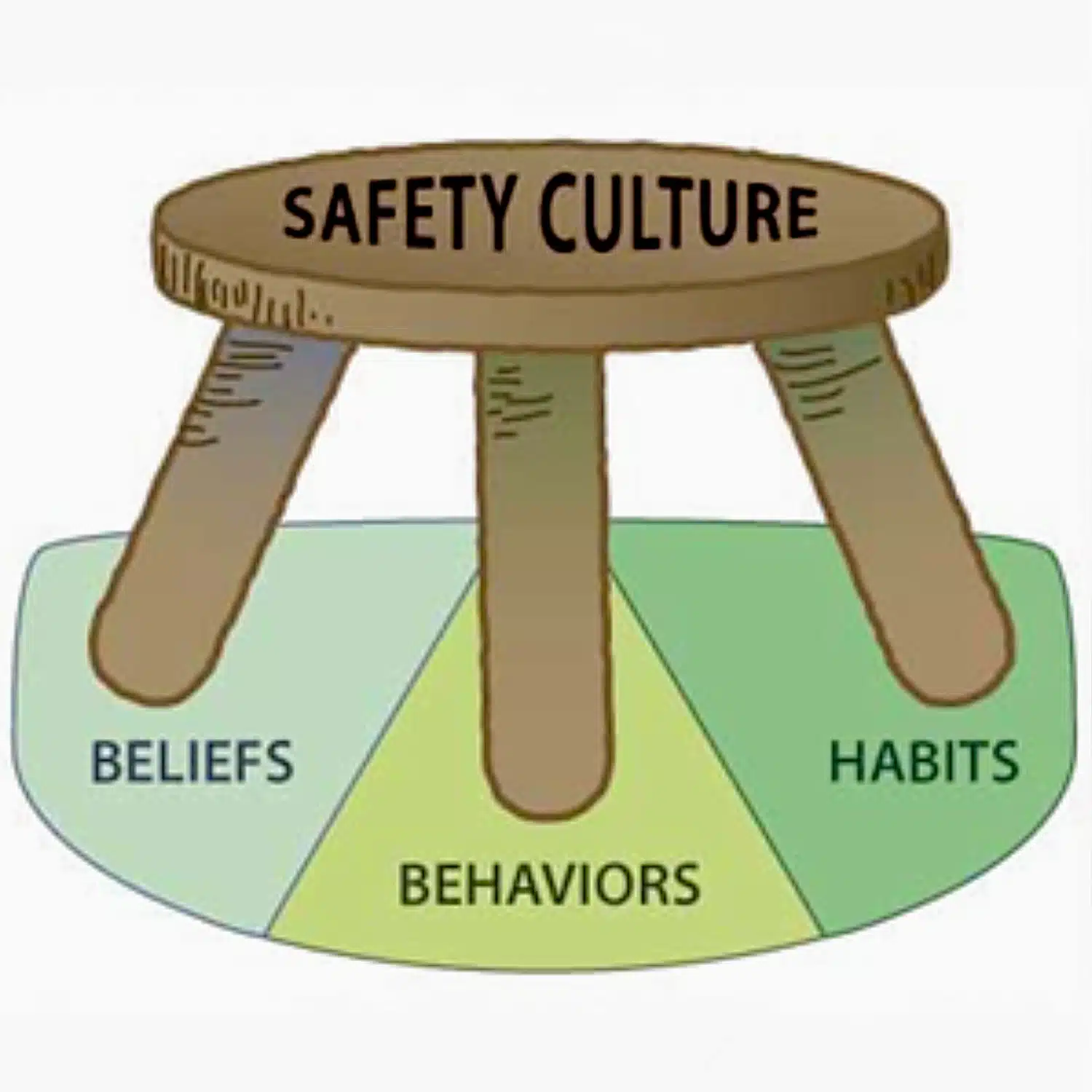
Enerteq’s Safety Framework is built around a simple but powerful metaphor: the Three-Legged Stool. Each leg represents a critical component of a sustainable safety culture:
- Beliefs – What the organization truly values about safety
- Behaviors – How those values are expressed in daily operations
- Habits – The routines that reinforce safety over time
If any leg is missing, the culture becomes unstable. In high-risk environments like hot tapping, line stopping, and corrosion prevention, this instability leads to inconsistent practices, increased incidents, and reputational damage. A strong safety culture must rest on all three legs to endure and evolve.
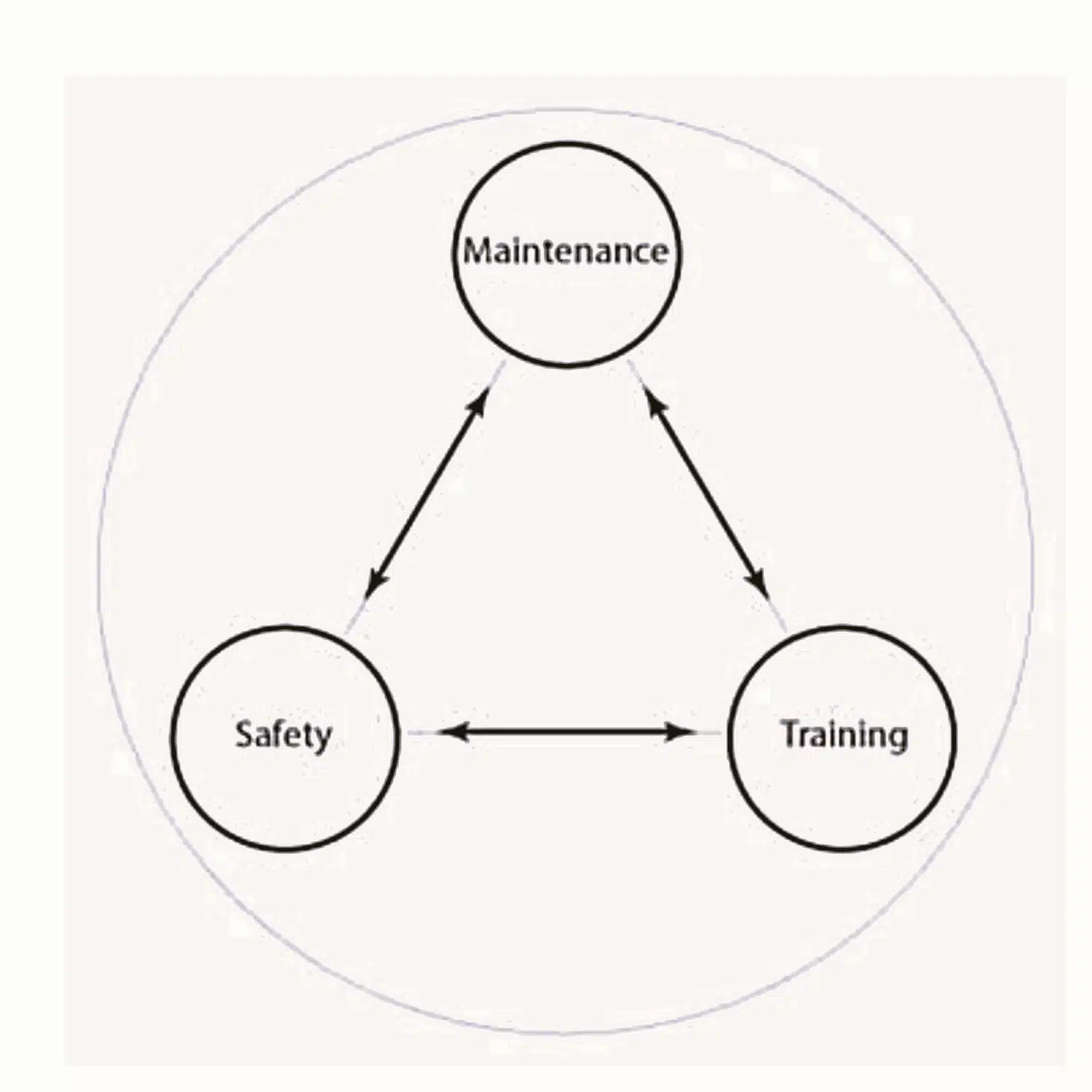
To make this framework actionable, Enerteq links each cultural component to a core department—forming an equilateral triangle that mirrors the stool’s footprint:
- Maintenance – Where safety is tested under pressure
- Safety – Where standards are set and monitored
- Training – Where behaviors and habits are shaped
The dynamic between these departments determines whether safety becomes a lived reality or remains a theoretical goal. By aligning beliefs with training, reinforcing behaviors in maintenance, and embedding habits through safety protocols, leaders can drive meaningful cultural change. Plants that embrace this model see measurable improvements in incident rates, operational efficiency, and workforce morale.
Enerteq’s Safety Framework is designed to help pipeline professionals lead that transformation—one belief, one behavior, and one habit at a time.
Enerteq’s Safety Culture Model: Aligning with OSHA Construction Standards (29 CFR 1926)
The Occupational Safety and Health Administration’s (OSHA), Construction Standards (29 CFR 1926) establish the baseline requirements for protecting workers in high‑risk environments. These regulations cover critical areas such as general safety provisions (§1926.20), training and education (§1926.21), personal protective equipment (§1926.28, §1926.95‑107), fire protection (§1926.150), and hazard communication (§1926.59). For Enerteq Solutions, these standards are not viewed as minimum compliance measures but as essential pillars of its Safety Culture Model. By embedding OSHA’s requirements into daily operations, Enerteq ensures that every pipeline integrity project is executed with a commitment to worker safety, regulatory compliance, and operational excellence.
Enerteq’s Three‑Legged Stool framework of beliefs, behaviors, and habits directly reflects OSHA’s emphasis on training, accountability, and hazard prevention. Beliefs are reinforced through structured safety education aligned with §1926.21, behaviors are shaped by consistent use of PPE and safe work practices outlined in §1926.28, and habits are sustained through proactive hazard communication and maintenance protocols. This integration ensures that OSHA’s construction standards are not just rules to follow, but part of a living culture where safety is embedded into every decision. By aligning Enerteq’s safety culture with OSHA’s 1926 standards, the company demonstrates that compliance and culture are inseparable — protecting crews, ensuring reliability, and building long‑term trust with clients in the pipeline industry
